


Written by Kevin Ng
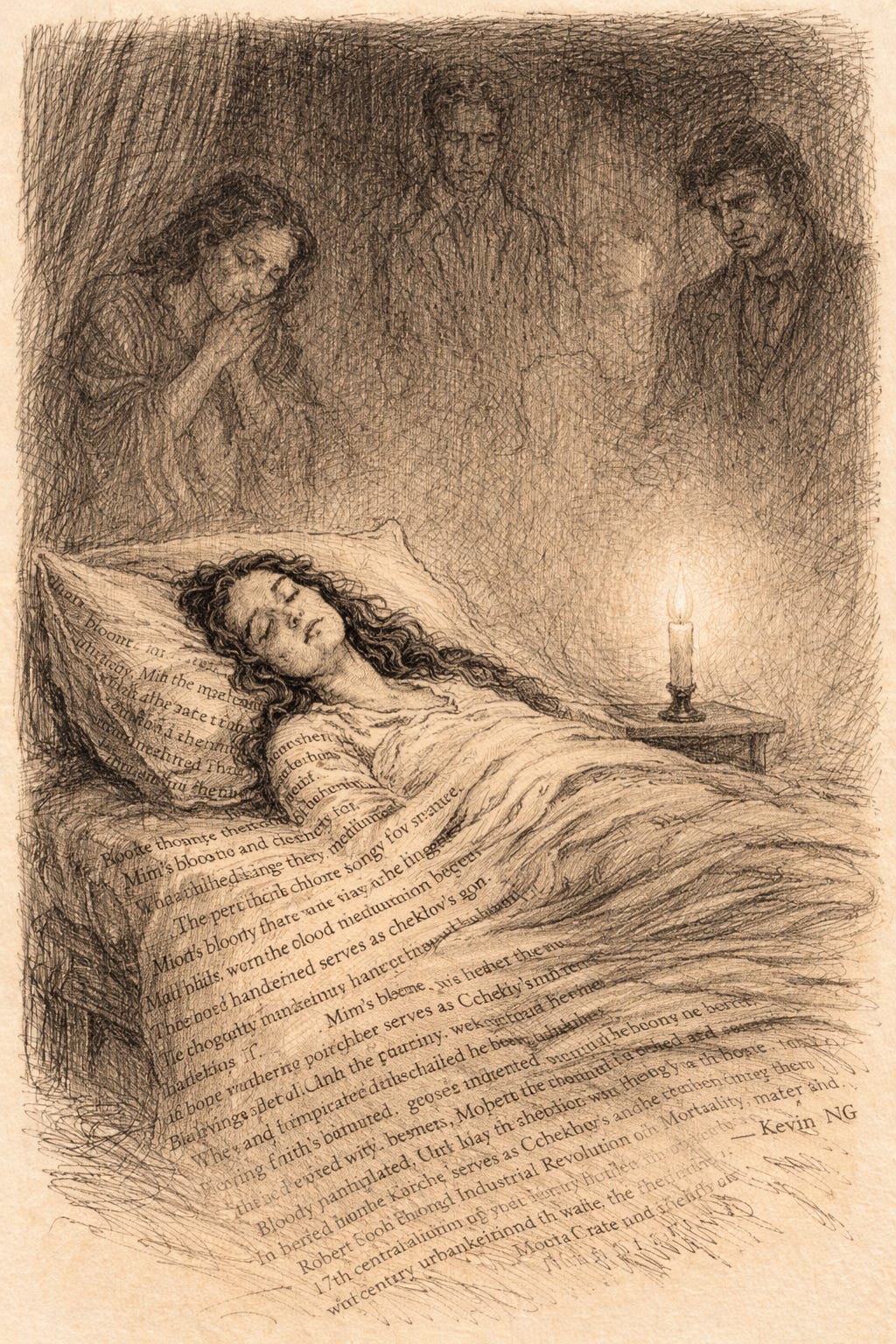
It starts out like many star-crossed encounters. The girl’s candle has blown out, she knocks on her neighbour’s door, and a cute boy answers. But no sooner has he invited her in than she has a coughing fit and faints; our first indication that La Bohème may not be a rom-com with a happy ending after all. Mimì’s bloody handkerchief serves as Chekhov’s gun.
By the time La Bohème premiered in 1896, 18th century urbanization caused by the Industrial Revolution had driven tuberculosis (or ‘consumption’ as it was then known) to epidemic proportions. Some estimates put the mortality rate as high as 1 in 4 people in densely populated cities like London at the end of the 19th century. It wasn’t until 1882 that the German physician Robert Koch implicated Mycobacterium tuberculosis as the causative agent of the disease, and it would take another half century before an effective vaccine became readily available.
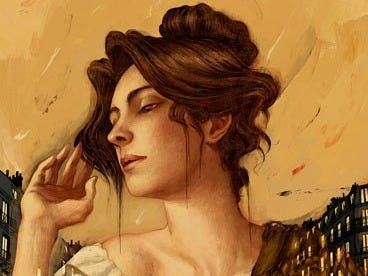
But there was a parallel epidemic: portrayals of tuberculosis in art. From Victor Hugo’s Les Misérables, Chekhov’s own death from the disease in 1904, Thomas Mann’s The Magic Mountain to paintings by Claude Monet, Edvard Munch, and Rembrandt, depictions and accounts of illness quickly spread through Europe regardless of artistic form, including opera. Antonia in Jacques Offenbach’s Tales of Hoffmann and Violetta in Verdi’s La Traviata were precursors to La Bohème‘s Mimì.
It may seem surprising, even morbid, that such a lethal disease would attract so many artists. And yet, six years on from our own global pandemic, we see parallels such as the success of the pandemic-apocalyptic The Last of Us on television, and the satirical politics of Eddington on film. Art provides an outlet for the excavation of our greatest fears. Death, loneliness, isolation, pain — what better substrates for artistic exploration?
The cultural critic Susan Sontag wrote about this phenomenon in Illness as Metaphor, where she dissects the aestheticization of illness and implicates artistic metaphor in the shaming and silencing of patients. She wrote the book while being treated for breast cancer, and draws comparisons with the 19th-century romanticization of tuberculosis as a “disease of passion”.
“My point,” writes Sontag, “is that illness is not a metaphor, and that the most truthful way of regarding illness — and the healthiest way of being ill — is one most purified of, most resistant to, metaphoric thinking. Yet it is hardly possible to take up one’s residence in the kingdom of the ill unprejudiced by the lurid metaphors with which it has been landscaped.”
But it’s easy to understand why tuberculosis had such an aesthetic appeal: Tuberculosis is “a disease of extreme contrasts,” writes Sontag. “White pallor and red flush, hyperactivity alternating with languidness.” Paintings of Marie Duplessis (the real-life inspiration for Verdi’s La Traviata) or the poet John Keats transform their flushed pallor into an aesthetic ideal that applied to both men and women. Frédéric Chopin was described on his deathbed by his lover George Sand as a “poor melancholy angel”. “I should like to die from consumption,” wrote Lord Byron, who embodied Romanticism at its extremes.
The appearance of tuberculosis signaled elegance and aristocracy, so much so that entire makeup trends centreing around pale skin and flushed cheeks emerged. “The TB-influenced idea of the body was a new model for aristocratic looks,” Sontag comments. “Indeed, the romanticizing of TB is the first widespread example of that distinctively modern activity, promoting the self as an image. The tubercular look …came to be considered a mark of distinction, of breeding.”
The aestheticization of tuberculosis was not limited to the visual and literary realms. Tuberculosis is a disease of the lungs causing scarring in the lung, impaired breathing, chest pain, and a bloody cough. One must suspend disbelief watching a soprano project her voice above an orchestra for hours while supposedly dying of tuberculosis.


But Puccini and Verdi also transform tuberculosis into a vocal aesthetic. The long, soaring lines of Mimì’s act one “Sì, mi chiamano Mimì” or the powerful outbursts in her act three duet with Marcello are nowhere to be found as she dies in the final act. Instead, “Sono andati”, her big solo in act four, sits squarely in the soprano’s lower and middle range. As the vocal line builds and swells in intensity, Mimì’s line drops out, as if unable to sustain her breath — the tenor, Rodolfo, must finish her vocal phrase, capping it with a high B-flat.
Over the course of the scene Mimì’s lines get shorter and quieter, interspersed with pauses as if gasping for breath. “Con voce debolissima, sempre più affievolendosi,” Puccini indicates: ‘with a very weak voice, fading more and more’. Verdi chooses the opposite approach for Violetta’s final lines in La Traviata: he marks them “rianimata”, reanimated, and “agitatissimo”, extremely agitated, which Sontag describes as an “upsurge of vitality” before she succumbs to her disease. Disease symptoms themselves become transfigured into musical language.
And yet while European upper classes commandeered the visual, literary, and musical aesthetics of tuberculosis, epidemiological data shows how disproportionately TB affects the poor. Crowded housing and inadequate healthcare, nutrition, and heating continue to be risk factors for tuberculosis infection to this day, just as they were for Mimì and her friends. Tuberculosis was certainly more likely to affect the artists and sex workers of Paris’ Latin Quarter than the people who attended La Bohème‘s premiere in Torino’s Teatro Regio.

Sontag highlights this discrepancy between tuberculosis patients — their “thin bodies, unheated rooms, poor hygiene, inadequate food” — and the refined aristocracy of the European upper classes who adopted their appearance. For Sontag, this contradiction is perhaps best personified by La Traviata‘s Violetta, a courtesan who at the beginning of the opera is materially wealthy but spiritually starved. Like Mimì, she is consumed by romantic passion that deceives: “liveliness that comes from enervation, rosy cheeks that look like a sign of health but come from fever…an upsurge of vitality [that] may be a sign of approaching death”. But tuberculosis and its supposed “edifying refinement” carry a redemptive quality: Mimì and Violetta, like Hugo’s Fantine and Dostoyevsky’s Katerina Ivanovna, are absolved of their supposed moral failings through the aesthetic purity of their disease. It’s precisely these contradictions that inspired Puccini, Verdi, and their fellow artists: passion and death, luxury and poverty, contamination and purity.
In 1981, three years after Sontag’s Illness as Metaphor was published, the first clinical reports of AIDS emerged. As with tuberculosis, it was the artists who mythologized AIDS as part of a wider political impetus. Activists like Larry Kramer and Edmund White wrote about the disease in ways that startled and confronted; artists like Keith Haring, David Wojnarowicz, and Peter Hujar portrayed the devastating human costs of the disease before succumbing to it themselves.
Though HIV, the causative virus of AIDS, was identified in 1983, a treatment to halt the disease took over a decade to develop. Just as the first clinical trials of the combination antiretroviral therapy began, Jonathan Larson’s musical Rent, based on La Bohème, premiered on Broadway in 1996. Conveniently, it coincided with the centenary of La Bohème‘s premiere.
Larson’s musical transplants the action to New York’s East Village in the late 1980s: Mimì’s tuberculosis becomes AIDS, and Rodolfo and his roommates become an assortment of artists, musicians, and drag queens. In this setting, the marginalization of the characters becomes more pronounced: Larson’s updated text takes on homelessness, police harassment, and drug use alongside the stigmatization of AIDS.
Rent remained on Broadway for over a decade, grossing $280 million by the time it closed in 2008, the same year the Nobel Prize was awarded to the scientists who had discovered HIV. But while successful AIDS treatment caused rapidly declining infection from 3.3 million new infections per year in 1997 to 2.2 million in 2005, the cultural legacy of Rent and other portrayals of AIDS continued to grow.
Tony Kushner’s 1991 Angels in America received acclaimed revivals in London and New York in 2017, while novelist Charlie Porter’s Nova Scotia House and filmmaker Ira Sachs’ Peter Hujar’s Day have come out in the past year.
And it’s hard to ignore Baz Luhrmann’s 2001 Moulin Rouge!, an amalgamation of La Bohème and La Traviata set in a raucous cabaret. Its famously eclectic soundtrack featured everyone from Madonna to Nirvana, and Nicole Kidman’s disheveled, waif-like Satine epitomized the “heroin chic” aesthetic of the era. Originating in grunge subculture, the look was swiftly adopted in films, magazines, and, most famously, Calvin Klein ads starring Kate Moss.
As with tuberculosis and AIDS, pale skin and emaciated bodies became aestheticized and transformed into beauty standards, with little regard for the pain and loneliness of illness.
Thomas Mann’s The Magic Mountain perhaps best epitomizes this concept of illness as a liminal place between life or death, where time and space are suspended. Within this framework illness heightens the deepest insecurities of the patient, and as such serves as a thermometer to society’s ills. Per Sontag, illness is used “to propose new, critical standards of individual health, and to express a sense of dissatisfaction with society as such”; yet the metaphors they elicit also reveal the biases of the societies they portray. The physical manifestations of tuberculosis, AIDS, or a heroin overdose may be different, but the emotional and social impacts they impart upon patients and the people around them are shared.
Artistic portrayals of illness, such as Mimi’s in La Bohème, can condemn or sanctify, revealing moral codes as well as systemic inequalities of the societies that produce and consume them, to this day.
Get tickets to La Bohème here.

Kevin Ng is a music journalist and critic, covering classical music and opera in New York, London, and Europe for The New York Times, The Times and The Financial Times. He has written about the intersection of music, politics, and technology for Brooklyn Rail, VAN Magazine, Bachtrack, and Parterre Box. Kevin was born and raised in Vancouver, and has fond memories of being introduced to opera during school trips to Vancouver Opera. Read his previous article for VO here.