

People Are Like That
Inside Così fan tutte with Rob Herriot and Les Dala — laughter, honesty, and a Canadian reimagining.


You can download this podcast on all major platforms including Apple Podcasts and Spotify.
There is a particular kind of laughter that happens in the rehearsal hall when Così fan tutte is done right.
Not the polite kind.
Not the knowing chuckle of people who already feel comfortable in opera houses.
It’s the sudden, involuntary laughter that surprises even the people making it.
That laughter has been echoing through my conversations lately as Vancouver Opera prepares its upcoming production of Così fan tutte — an opera that still gets mislabelled as light, frivolous, or merely mischievous. It arrives wearing a smile, but if you sit with it for even a moment, it reveals itself as one of Mozart’s most psychologically perceptive works.
This staging has a distinctly Canadian lineage. It originated at Manitoba Opera, emerging in the careful, inventive period following shutdowns, when companies were rethinking scale, intimacy, and how to reconnect with audiences. From there, it travelled — refined, tested, and sharpened — and now arrives in Vancouver as a remount that feels both confident and alive.
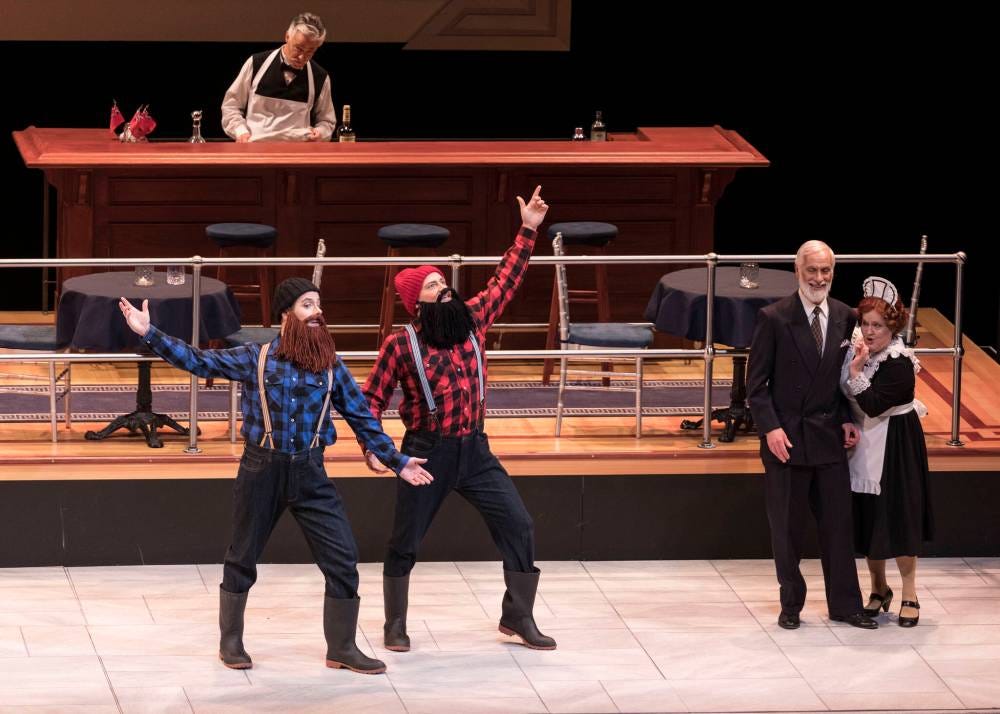
The production is set in the early 1930s, inside an elegant hotel perched at the edge of the Canadian wilderness. There are Mounties. There are waltzing log drivers. The visual world draws on Canadian film language and the dreamlike textures of National Film Board imagery. It’s playful, unmistakably local, and quietly radical in how it reframes a European masterpiece through a Canadian lens.
To talk about all of this, I was joined by stage director Rob Herriot and Vancouver Opera’s Associate Music Director and conductor Les Dala — two artists whose shared history stretches back to the University of Toronto in the 1990s. Back then, Rob was, by Les’s account, “an absolutely beautiful tenor,” and Les was the pianist-accompanist at the centre of a tight-knit musical circle.
That detail matters. Rob didn’t come to directing through theory alone. He came through breath, phrasing, and standing inside Mozart’s sound world. And Così is not an opera that lets you fake that.
“Opera is music,” Rob said simply. “And I think this is one of Mozart’s best scores.”
Les agreed without hesitation. He described Così fan tutte as Mozart’s greatest ensemble opera — a miraculous succession of duets, trios, quartets, quintets, and finales that feel perfectly calibrated to human emotion. What makes it extraordinary, he noted, is that Mozart took a libretto once dismissed as trivial and transformed it into something devastatingly truthful.
“The music never lies,” Les said.
That line lingered.
Mozart doesn’t lie.
Even when his characters do.
Because in Così fan tutte, everyone is lying — to one another, to themselves, sometimes gently, sometimes recklessly. Lovers disguise themselves. A philosopher runs an experiment. Certainties collapse. And yet the music refuses to participate in the deception. It tells us exactly what is happening inside these people, often before they themselves understand it.
Les spoke about this in terms of keys, instrumentation, and Mozart’s unerring emotional compass. “All the clues are there,” he said. “Even when the situation is absurd, the sincerity is real.”
That sincerity is often overlooked. Così is burdened by its literal title — Women Are Like That — which hasn’t aged gracefully, and by a surface story that can sound like a cruel experiment. But Rob was clear: the opera does not let anyone off the hook.
“I’d love to change the title to People Are Like That,” he said. “Because we all are.”
In this production, the men are not neutral observers. They are fully implicated. Ferrando, Rob noted, is just as guilty as Fiordiligi — and more interestingly, he genuinely falls in love. The women, meanwhile, are not flighty caricatures. They are strong, principled, devoted people placed under extraordinary emotional pressure.
The production doesn’t smooth over that tension. It trusts the music to complicate it.
Rob talked about following the score rather than imposing interpretation onto it. In Mozart, he said, the psychology is already embedded. The calm suspension of Soave sia il vento. The crystalline textures of the ensembles. The strange, almost unsettling generosity of the final chorus.
And then there’s that ending.
Musically, it is radiant. Trumpets and timpani return. The opera closes in C major, just as it began. It sounds like forgiveness. It sounds like resolution. And yet, emotionally, something remains unresolved.
Les described it as situational comedy — a bit like Seinfeld or Friends — where everyone puts on their best face because the curtain is coming down. What the audience carries home is the unanswered question: what happens next?
“It would be amazing if there were a sequel,” Les joked. “The day after.”
That ambiguity is not a flaw. It’s the point. Così fan tutte exposes how fragile our certainties are, how easily love rearranges our moral furniture. And it does so without cruelty. Even Don Alfonso emerges not as a villain, but as a weary human being — someone who has lived, been disappointed, and lost faith in innocence.
“There’s no evil intention,” Les said. “Just experience.”
This staging leans into that humanity with some quietly brilliant choices. One of them is practical and poetic at once: the recitatives are accompanied not by harpsichord, but by a hotel lobby piano, played onstage by pianist Tina Chang. It grounds the opera in a social space we recognize — a place of passing encounters, overheard conversations, and performances both private and public.
And it is, undeniably, funny.
Rob recalled opening nights in Manitoba and later in Kelowna, where many audience members were attending opera for the very first time. Their response was immediate: I didn’t know opera could be this funny. When the men depart as Mounties, the house erupts. Laughter becomes a form of welcome.
That may be why Così fan tutte remains such a powerful entry point for newcomers. Not because it’s simple — it isn’t — but because it trusts its audience. You don’t need to decode it. You don’t need to intellectualize it. You can simply sit back, listen, and recognize yourself in the mess.
Near the end of our conversation, I asked Rob for his pitch — the one he would give to someone who has never been to the opera.
He didn’t pause.
“Così fan tutte shows us what it is to be human,” he said. “How to be sincere, passionate, in love, weak, contradictory — all in a beautiful way, with the most divine music ever written.”
That feels exactly right.
Vancouver Opera presents Così fan tutte on February 7, 12, and 15 at the Queen Elizabeth Theatre. Tickets and information are available via our website.

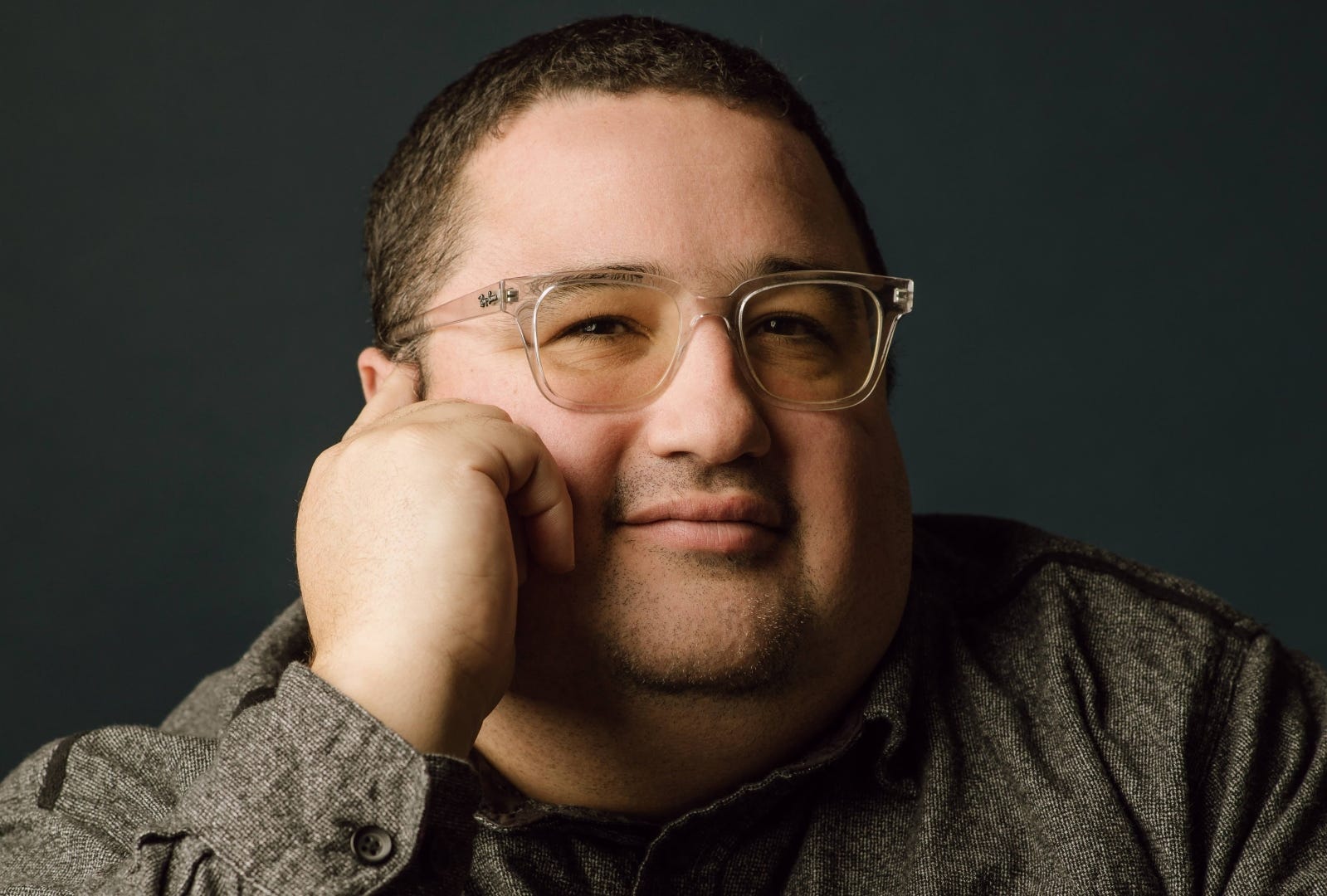
Ashley Daniel Foot - Host, Inside Vancouver Opera
Ashley Daniel Foot bridges the gap between the stage and the city through insightful, deep-dive conversations. Currently serving as Director of Engagement and Civic Practice at Vancouver Opera, he curates the multidisciplinary TD VOICES series and leads the City of Vancouver’s Arts and Culture Advisory Committee, ensuring storytelling and civic responsibility remain at the heart of the opera.
Mack McGillivray - Producer, Inside Vancouver Opera
Mack is a multimedia producer, creating shows for radio and podcast. He is passionate about cultivating local community and a lifelong lover of opera.
Great interview thankyou! I love the Attwood voice saying "men are abominable!" Sounds like it will be a super show.