



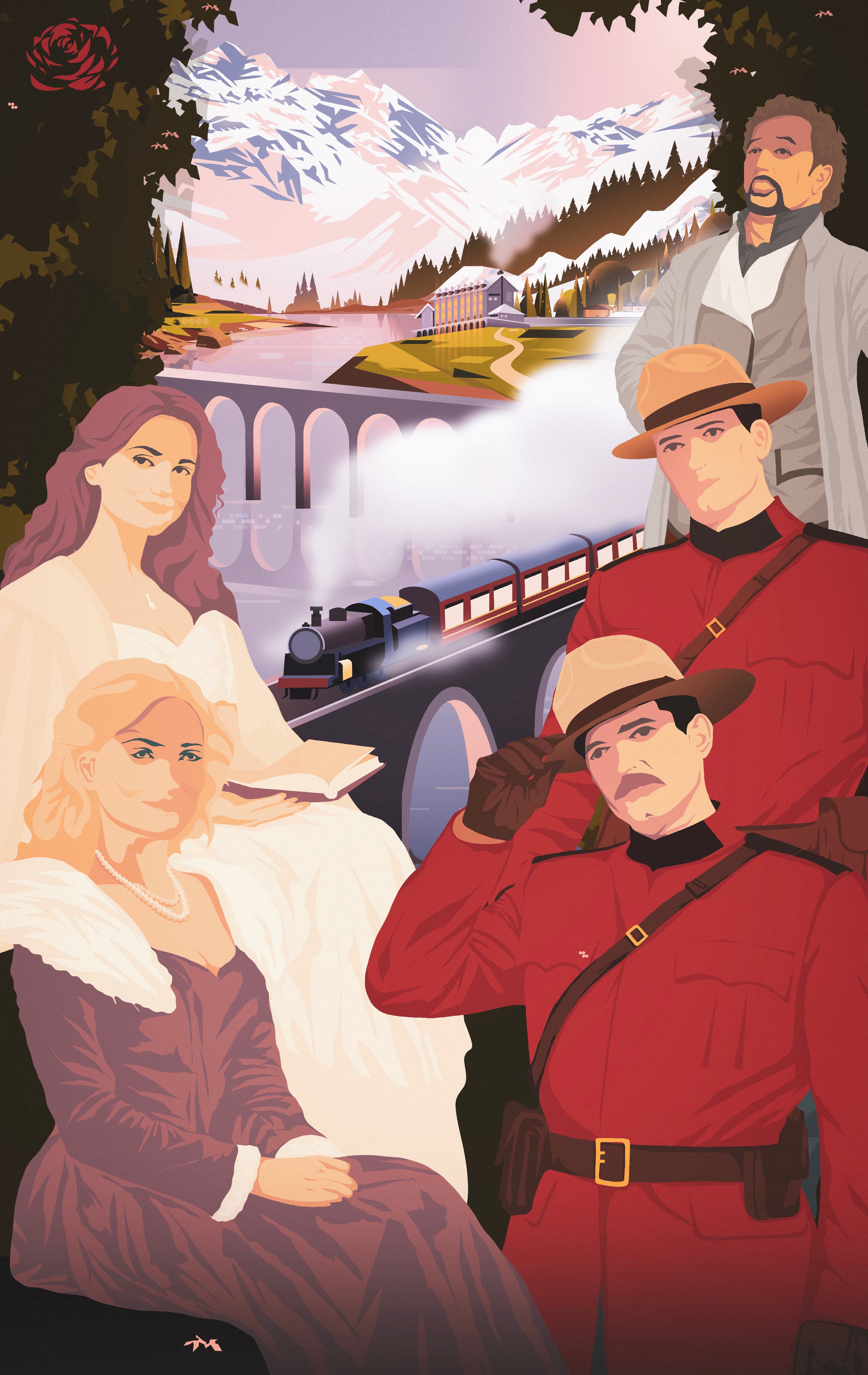
You can download this podcast on all major platforms including Apple Podcasts and Spotify.
Article written by Kevin Ng
The American musicologist and critic Joseph Kerman famously called Cosi “Mozart’s most problematic work,” and from a 2026 perspective the opera’s misogyny seems problematic indeed. The issues start from the title itself: Così fan tutte translates as “so do they all”, and the use of the feminine “tutte” renders the meaning as something along the lines of “All women are like that.”
The plot begins with two young men, Ferrando and Guglielmo, making a chauvinistic bet on women’s fidelity. “Woman’s faithfulness is like the Arabian phoenix,” the cynical Don Alfonso tells them. “Everyone says it exists, but nobody knows where it is.” The men devise a plan to disguise themselves and seduce each other’s fiancées, the sisters Fiordiligi and Dorabella, and over the course of the opera behave abysmally: they lie, deceive, threaten suicide, and refuse to take no for an answer.
The emotional climax of the opera sees a disguised Ferrando charge into Fiordiligi’s room where, to some of Mozart’s most sublime music, he threatens to kill himself as she begs him to leave. From a 2026 perspective, tricking someone into sex and refusing to accept refusal crosses every conceivable boundary of consent. And how do the men respond? With further sweeping generalizations about women’s supposed faithlessness. “My dear women, you treat us so poorly that when men complain I sympathize with them,” Guglielmo proclaims. “All women are like that,” Don Alfonso replies glibly, giving the opera its title.
“From a 2026 perspective, tricking someone into sex and refusing to accept refusal crosses every conceivable boundary of consent.”
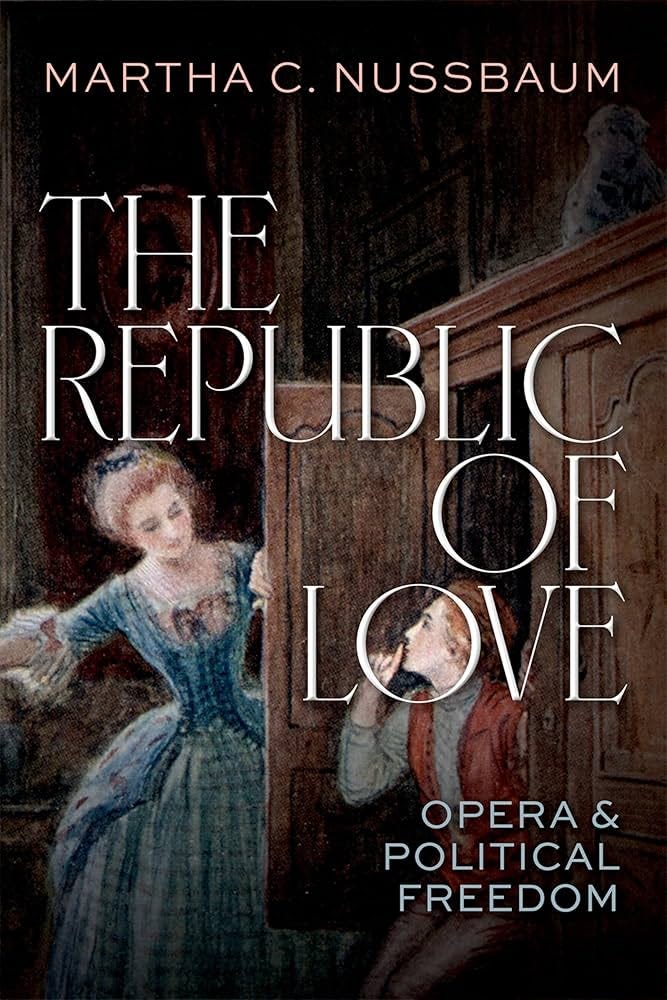
The philosopher and ethicist Martha Nussbaum tackles this problem in her upcoming book, “The Republic of Love: Opera and Political Freedom”, which will be published this April by Oxford University Press. “From the title onward, the piece announces itself as an unmasking of women’s pretenses of fidelity and nobility,” Nussbaum writes. “They are all cheats, and dupes into the bargain, ready to fall for the first set of false mustaches that come their way. This becomes especially clear when we consider the subtitle [La scuola degli amanti, or the school for lovers] alongside the title. Whereas ‘tutte’ is unambiguously feminine, ‘amanti’ could refer to the male lovers only, or to all lovers, male or female. However, in Don Alfonso’s world, it is men who do the learning, women who exhibit an unchanging nature”.’


“The idea of the opera being a “battle of the sexes” makes for a nice hook for marketing purposes,” comments musicologist Kristi Brown-Montesano, who wrote “Understanding the Women in Mozart’s Operas”, “but it suggests a progressiveness in the opera that simply isn’t there. For there to be an equal competition, both “teams” need to know the rules—and the rules need to be fair and consistent. And the official overseeing the game can’t be rigging things behind the scenes for a specific outcome.”
“It features some of the basest, most cynical machinations imaginable, coupled with some of Mozart’s most gorgeous music,” adds musicologist Susan McClary, best known for her work in combining musicology with feminist theory.
“For a long time, Mozart fans liked to argue that Mozart didn’t have a clue what Da Ponte was doing in the libretto. But they wrote this scenario in close collaboration. Only claiming Mozart as an idiot savant gets him off the hook. Cosí presents a version of the 18th century close to those of the Marquis de Sade or Les Liaisons dangereuses. It reveals the dark underbelly of the Enlightenment, with music that purports to simulate pure order”. In other words, the Classical symmetry of Mozart’s music can be seen as both weapon and balm.
“The Classical symmetry of Mozart’s music can function both as weapon and balm.”
So how do we, as a 21st-century audience, deal with this? The first is to grapple with the social and intellectual context of Così, and how Enlightenment-era thinking was used to exclude or suppress women. The central instigator of the opera, Don Alfonso, is described as a philosopher; his outlook most closely aligns with Rousseau, who in addition to his influence on economics, sociology, and fiction was also one of the first to formulate a philosophy of education. This parallels Mozart and Da Ponte's "school for lovers", where the men will only understand the duplicitous nature of women if they experience it first-hand.
But the sexism of this line of reasoning did not go unnoticed at the time: the early feminist author and philosopher Mary Wollstonecraft directly countered Rousseau's arguments in her influential A Vindication of the Rights of Women, and Così's Despina provides a direct foil to Don Alfonso's misogynistic stereotypic in the proto-feminist aria “In uomini, in soldati”. “You hope for faithfulness in men?” she asks. “They’re all cut from the same cloth: the fickle leaves and breezes are more stable…Let us women pay them back in the same way!”
Perhaps the greatest challenge to Don Alfonso’s conclusion that all women are the same lies in Mozart’s musical differentiation of the three characters. Vocal classifications have evolved since Mozart’s day — although Dorabella is typically performed by a mezzo-soprano today, all three roles are designated as “soprano” in Mozart’s score. Some singers have performed multiple roles within the same opera: Barbara Frittoli and Ana María Martinez have sung Fiordiligi and Despina, Anna Caterina Antonacci has sung Fiordiligi and Dorabella, and Cecilia Bartoli has sung all three roles.
But even if the interchangeability of voice types might support the conclusion that all women are the same, the musical language of the three characters could not be any more different. In line with the Enlightenment classicism of the opera, each is given one aria per act. These arias allow the three women to not just differentiate themselves from one another, but to show their independent paths of evolution. Despina’s music is distinguished on the basis of class: in line with other servant roles (think Mozart’s Susanna and Zerlina, or Paisello’s La serva padrona) her music evokes rustic and pastoral musical tropes, with prominent horns and bassoons and 6/8 rhythms.
Fiordiligi and Dorabella’s act one arias could scarcely be more different from one another. Faced with the departure of their fiancés and alarmed by the strange “Albanians” in their home, Dorabella’s “Smanie implacabili” is full of jerky, discontinuous phrases over turbulent strings: a musical representation of hyperventilation. Meanwhile, Fiordiligi’s “Come scoglio” is aggressive, almost martial in tone, with extreme leaps in vocal register and fiendishly challenging triplet runs.
It’s their second-act arias, though, that differentiate the sisters’ evolution. Dorabella’s “È amore un ladroncello” is jaunty and flirtatious, reflecting her free-spirited approach to love and sex. Meanwhile, Fiordiligi’s “Per pietà” is eight minutes of torment and shame; here, Mozart gives extended solo lines to the clarinet and horns, instruments he frequently used for their expressive properties. But Mozart’s use of the horn has yet another meaning: they are also an extra-musical evocation of infidelity, with the ram’s horns symbolizing the cuckold. Through the music, Mozart seems to make the argument that women are in fact not the same at all: two sisters in identical circumstances have wildly different psychologies.
As Nussbaum writes, “The music doesn’t just render emotionally determinate texts that are indeterminate; it actually subverts the entire point of the libretto. No, Don Alfonso, emotions are not just a game, they are real, and people – men and women equally -- have deep, interesting, and highly individual emotional lives”.
But McClary notes that the same emotional and musical rhetoric can be used to conceal the misogynistic underbelly of the opera. On act one's sublime "Soave sia il vento" in her review of Edward Said's Said on Opera, McClary writes that "the lyrics describe only the benign seascape and their waves of desire, and the three voices sing together much of the time in almost hymn-like unity in one of the most gorgeous pieces Mozart ever wrote...But we know that this entire scenario is but part of Alfonso’s ruse, that he is leading the clueless women to their destruction. And we can do nothing about it except bear witness to this most beautiful of entrapments. What does it mean to deploy all the rhetorical strategies needed to produce such rapture for purposes we recognize in advance as deeply injurious and corrupt?”
Mozart’s musical differentiation of women can be seen throughout his operas, especially in his collaborations with Da Ponte. Le nozze di Figaro, which predates Così by four years, already contains many of the dramatic and psychological seeds: “Così fan tutte le belle,” says Don Basilio in light of Susanna’s apparent infidelity. Figaro’s last-act aria contains many of the misogynistic tropes rehashed in Così: “Open your eyes, you incautious and stupid men,” he sings, “look at these women and what they are!”
But it’s the women that run the show, with Susanna, the Countess, and even Barbarina and Marcellina ten steps ahead of the men. “Only we poor women, who love these men so much, have to put up with their treacherousness and cruelty,” Marcellina sings after her son Figaro’s sexist tirade. Le nozze di Figaro and Don Giovanni contain some of Mozart’s most complex women, differentiated by situation, class, and age. Even Die Zauberflöte, which presents a misogyny and racism that goes even beyond that in Così, demarcates its women brilliantly, from Pamina’s melancholy to the Queen of the Night’s gleaming coloratura.
While Le nozze di Figaro, Don Giovanni, and Die Zauberflöte have happy endings with the triumph of good over evil, the ending of Così is far more ambiguous. The first decision any director has to make is how to stage the ending: do the couples return to their original pairs, or their new partners? Is a happy ending possible, given what the lovers have learned about each other and about themselves? More broadly, what is the right tone to take with the opera: is it a frothy sex comedy or a dark, cynical take on human infidelity? Can it be both?
“Così fan tutte invites us to confront not only the misogyny of the past, but its persistent echoes in the present.”
“After the revelations of systemic abuse, misogyny, and sexual misconduct that #MeToo revealed,” Brown-Montesano comments, “you’d think that any opera dramatizing an old, privileged guy telling young men about how women can’t think straight about love or sex would have a hard time making it on stage without some very thoughtful artistic work to reveal the major cultural cracks between then and now. But today, with the backlash against #MeToo and its legitimate claims—from the manosphere to MAGA to Donald Trump—I fear Don Alfonso’s basic premise of Così fan tutte (and its insinuation of “women can’t refuse”) is making a popular comeback.”
It’s precisely this complexity that has drawn directors to Così over the years. Nicholas Hytner, the British theatre director who led London’s National Theatre for over a decade, set the opera in 18th-century Italy for his 2006 Glyndebourne production. Here, the colourful petticoats and elegant, shaded gardens are a facade for the seriousness and ambiguity of the plot: the finale leaves the situation unresolved.
Other directors go even further: Austrian film director Michael Haneke, famous for Amour and The Piano Teacher, highlights the artifice of the partner-swapping by doing away with the men’s disguises entirely in his 2013 Madrid production.
The French director Christophe Honoré ups the violence of the opera by setting it in Italian-occupied Eritrea for his 2016 Aix-en-Provence production, adding a layer of colonialist racism to the sexism. Men manipulating sexual power, Honoré suggests, engenders intersectional layers of violence. Audiences were warned of its “provocative and sexually explicit” nature and some viewers were outraged, calling it “shocking” and “defamatory”. It’s miles away from the fizzy, comic romp that audiences have come to expect — but it’s a testament to Mozart and Da Ponte that Così can support such disparate approaches.
“Così fan tutte invites us to confront not only the misogyny of the past, but its persistent echoes in the present.”
That’s why Così continues to fascinate directors, singers, and audiences to this day. It’s both comedy and tragedy, cheerful and dark, old and modern. Our understanding of gender norms evolves with time, and we can glean from the history of Così the evolution of how we approach gender and morality. Beethoven found the opera immoral; Goethe found the subject simplistic and the characters underdeveloped; Victorian audiences found it risqué. And for us in 2026, watching Così invites us to confront the misogyny of the past and the present.
‘Così fan tutte’ in the Age of Consent
written by Kevin Ng
edited by Jane Potter
podcast hosted and produced by Ashley Daniel Foot
podcast editor and associate producer Mack McGillivray
original atwork created by Barry Ekko

Kevin Ng is a music journalist and critic, covering classical music and opera in New York, London, and Europe for The Times and The Financial Times. He has written about the intersection of music, politics, and technology for Brooklyn Rail, VAN Magazine, Bachtrack, and Parterre Box. Kevin was born and raised in Vancouver, and has fond memories of being introduced to opera during school trips to Vancouver Opera.

Jane Potter holds an MA in Critical and Creative writing from the University of Gloucestershire, and loves telling stories in all forms: She lives in Victoria, and when she isn’t busy reading and writing, she can be found running a small business, baking in the kitchen, or weeding the garden.

Ashley Daniel Foot - Host of Inside Vancouver Opera
Ashley is Vancouver Opera’s Director of Engagement and Civic Practice and host of Inside Vancouver Opera. Boundlessly creative and fascinated by the way that art is created and presented, Ashley has guided arts organizations across Canada to craft messages and tell unique stories.

Barry Ekko is a Vancouver-based illustrator and graphic designer whose work features retro-futuristic poster aesthetics. He collaborates with cultural institutions—including Vancouver Opera—and applies striking, nostalgic graphics to contemporary storytelling. His style evokes vintage cinema and bold geometry, reimagining dramatic narratives through modern visual language.
Mack McGillivray - Producer of Inside Vancouver Opera
Mack is a multimedia producer, creating shows for radio and podcast. He is passionate about cultivating local community and a lifelong lover of opera.
The tension between Mozart's sublime music and the consent violations in the plot is somehting I haven't seen discussed this clearly before. What gets me is how the musical differentiation of the women actually undermines Don Alfonso's thesis, but most productions let that subversion get bureid under the "frothy comedy" framing. I caught a production in 2023 where the director tried to play it straight as lighthearted, and it felt tone-deaf given how the #MeToo backlash is trying to normalize exactly this kind of manipulation again.