



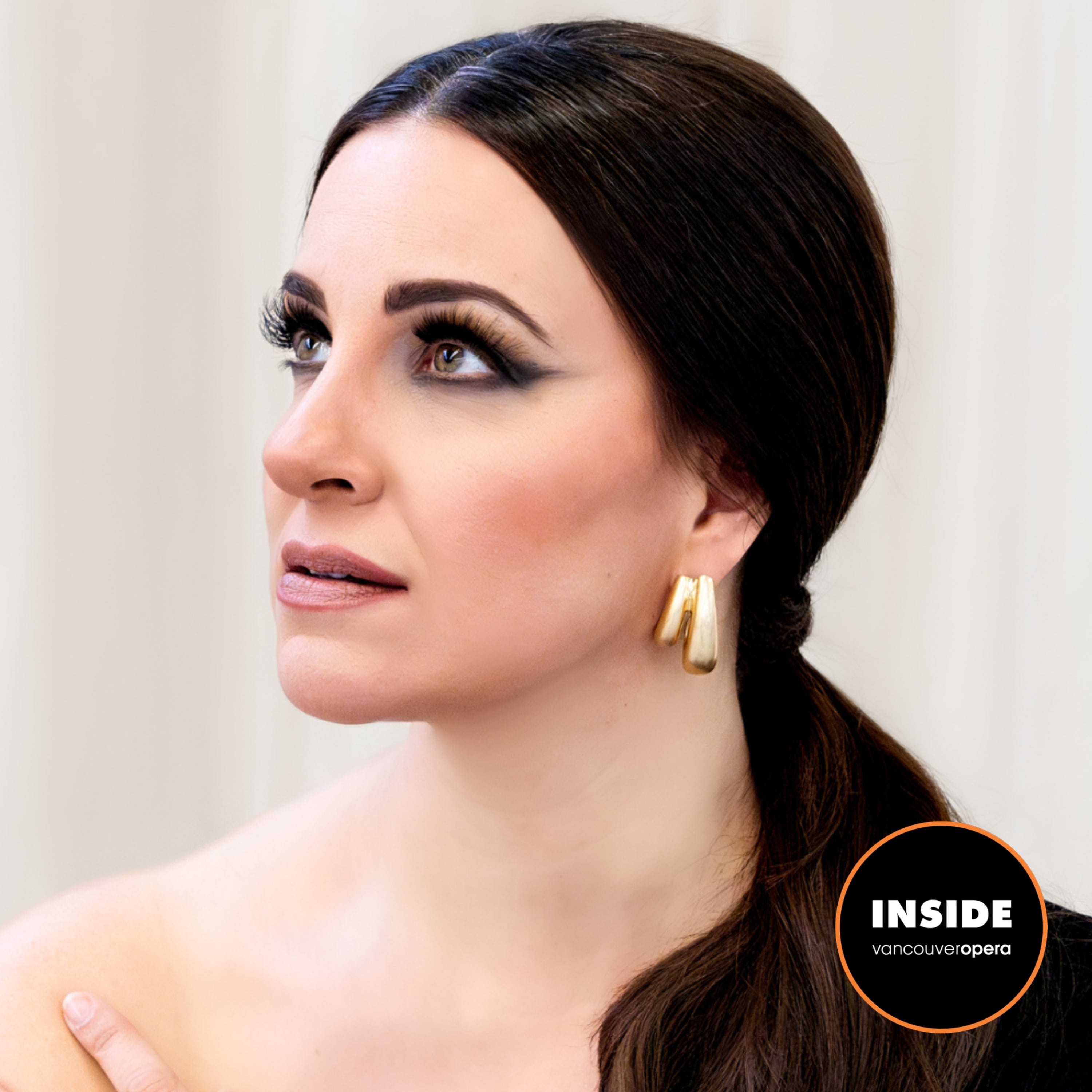
Joyce El-Khoury was born in Lebanon, arrived in Canada at six speaking Arabic and French, and grew up planning to be a nurse. She spent four years working at a children’s hospital in Ottawa before her parents, of all people, talked her into studying music. Since then she has sung on many of the world’s great stages, and this season she opens Vancouver Opera’s 2026–27 season as Floria Tosca.
Tosca is a singer, a lover and a woman of deep faith, and Puccini gives her less than a day to lose almost everything. In this conversation from Inside Vancouver Opera, El-Khoury talks about the grandfather whose voice still moves her to tears, and the quiet instinct she has learned to trust. She also explains why Tosca’s jealousy isn’t paranoia at all. And she describes the moment in the score when her voice turns into something closer to a blade.
Tosca runs October 24 and 29 and November 1 at the Queen Elizabeth Theatre, conducted by Jacques Lacombe and directed by Brenna Corner.
You can download this podcast on all major platforms including Apple Podcasts and Spotify.
I. The Instrument
ASHLEY DANIEL FOOT: There are few characters in opera quite like Floria Tosca. She’s a celebrated singer, a passionate lover, a woman of faith — and someone who, over the course of a single day, finds her entire world turned upside down. I would argue they’re the most dangerous 24 hours in opera.
My guest today is the internationally acclaimed Lebanese-Canadian soprano Joyce El-Khoury, who joins Vancouver Opera as Tosca.
Joyce, you’ve spent so much of your life developing this extraordinary instrument. Does your voice still surprise you?
JOYCE EL-KHOURY: The voice is such a delicate, wonderful, mysterious instrument. Because it’s part of our body, it’s affected by our entire humanity. Every year that goes by, the voice changes. And what’s happening in your life at any point affects how your voice responds to the commands you give it.
So we’re called to have a really intimate relationship with the voice, come what may. I have to be so in tune with it, because it communicates with me all the time. I take each day as it comes. I wouldn’t say it’s like having a new instrument every day, but every day I check in with the voice, I see what it’s telling me, and I give it what it needs.
ADF: You talked about listening to your voice. But I also heard the word instinct. Where do you think that comes from? Because you had a very musical grandfather.
JEK: I love that you know that.
ADF: Didn’t they call him Kyrie Eleison?
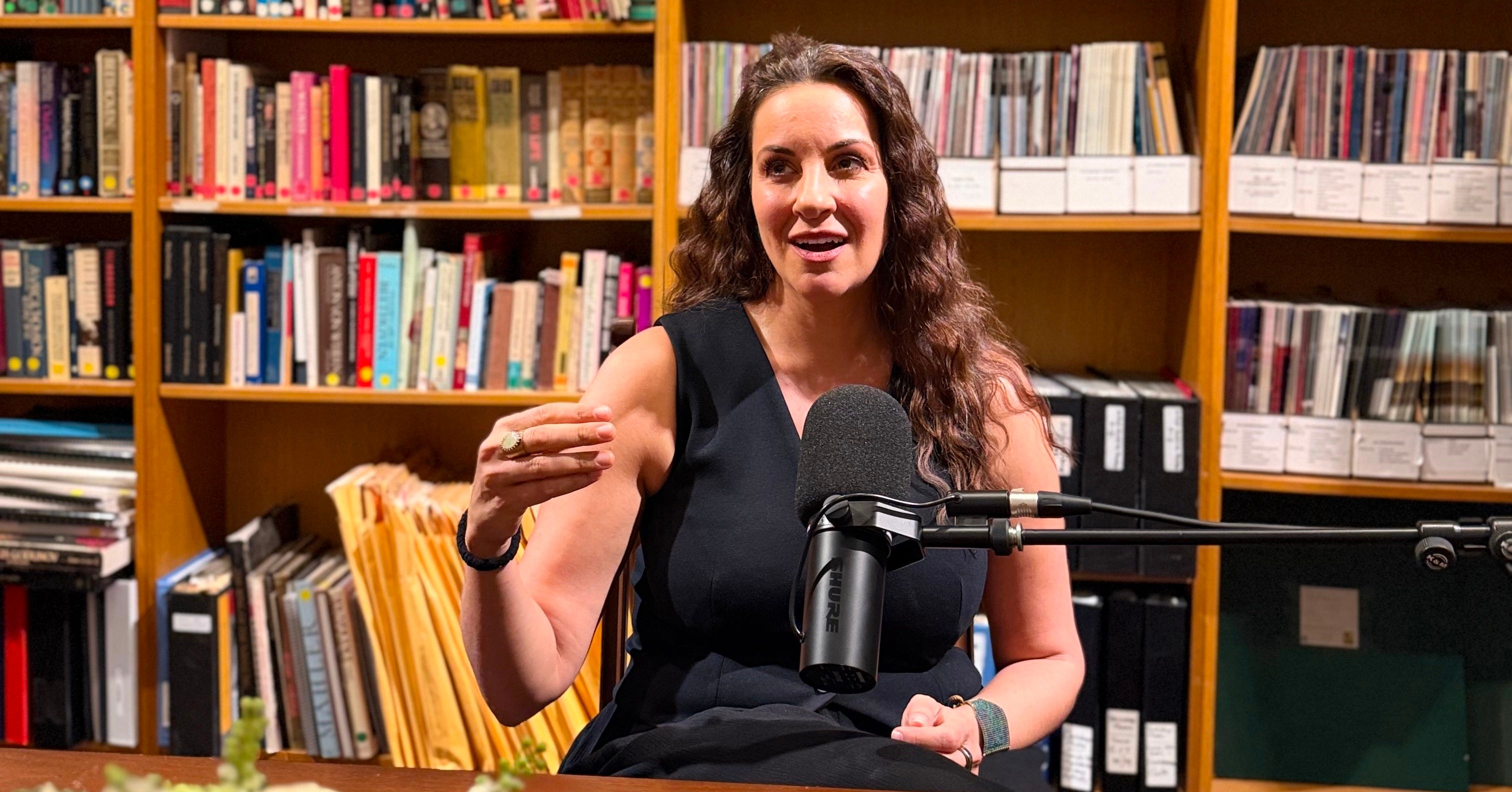
JEK: Yes, they did. Wow. I want to cry when I think of that. It’s so special to me — I’m so grateful you mentioned him.
My grandfather had this gorgeous voice and sang in church for 35 years. He was known around the village in Lebanon by that name. People didn’t call him George.
Is instinct passed down? The voice, I guess, was passed down. My father has a beautiful voice, and my baby sister has an amazing voice as well. So there’s something there.
As for instinct — since I was little, I’ve always had antennas. I don’t know how to explain it, but I’ve always sensed the energy around me, people’s emotions, people’s thoughts. I can absorb a lot and feel a lot. So for me, the challenge is obeying my own instinct, because I get a lot of interference from others, energetically. We’re getting a little woo. Does that make sense?
ADF: We like that here.
JEK: So instinct is something I was forced to get to know. When I was younger, if I went against my instinct, I paid for it. Now, whenever there’s this little voice inside — very, very quiet — or this feeling I get in my chest, I recognize it.
II. The Long Way Round
ADF: We talk to a lot of singers on this show, and the one thing that stands out is that this is not a career for the faint of heart. You didn’t always know this was the path you’d follow. You worked in healthcare — is that true?
JEK: That’s right. And I’m very grateful, because it was my parents who pushed me into music. I did my high school co-op at CHEO, the children’s hospital in Ottawa. After the co-op they gave me a job, and I worked there for four years. That was in preparation, because I wanted to go into nursing. That’s what I really, really wanted to do, and part of me is still fascinated by healthcare.
But when it came time to apply to university, my parents said, “You have this voice and this gift, and it would be a shame not to use it. We know it scares you, but we really think you should study music. Let’s just see what happens.”
I know usually it’s the reverse.
ADF: It is, isn’t it? And the next thing you know, you’re cold-emailing Lorin Maazel.
JEK: [Laughs] Life is really surprising.
ADF: Where did you pluck up the courage to do that?
JEK: Well, I didn’t email him directly. I was in the Met’s young artist program, and I was on a train from New York to Philly — there must have been some audition; we did that train ride a lot back then. I ran into a colleague who mentioned that Lorin Maazel was doing Il trittico at the festival on his farm. I thought, that’s perfect — I want to sing Lauretta. So I auditioned, and I got the job.
Then he asked, “Do you want to sing Suor Angelica?” I said no, I’m not ready. This was about 15 years ago — I was so young. At first he’d actually asked me to do Giorgetta, and I said absolutely not. So I said: I’ll sing Lauretta, and I’ll cover Suor Angelica.
There’s a big story there with Suor Angelica. But looking back at my career, and my life in general, I have so much peace now. I wish I could convey this to younger singers: what is yours doesn’t escape you. In career and in life.
ADF: “What is yours doesn’t escape you.” Tell me more.
JEK: [Pause] I think some things are meant to be. Sometimes the things we chase, the things we want, are not necessarily for our greatest good, and not part of the plan for us. And sometimes the things we avoid, the things that scare us, are. So keeping an open mind is one of the greatest things we can do for ourselves — as singers, as performers, and just as human beings. Life can be so surprising.
III. Who Is Tosca?
ADF: Let’s turn to Tosca. Before the jealousy, the violence, the terrible choices — who is this woman? When she wakes up in the morning, before any of this begins, what is she thinking about?
JEK: She thinks about Mario. And her voice. And God.
ADF: How important is her faith to Tosca?
JEK: I think it’s everything to her.
ADF: How does that come through in performance?
JEK: Puccini wrote her faith into the music so beautifully. From her first entrance, she comes in with flowers to adorn the Madonna. She says it: don’t kiss me here, I have to adorn the Madonna. And then again later, in Vissi d’arte, where she talks directly to God.
ADF: One of the most incredible moments in all of opera.
JEK: Everything stops, because it’s a glimpse into what’s going on in her mind. If it were a film, it might be five seconds. She’s saying: how is this happening to me? I’ve done nothing but love and give and care. How do you repay me like this?
It’s so powerful because, whatever you’ve been through in your life, an audience member can relate to some variation of that sentiment. And in that moment of crisis, that’s where she turns for comfort.
ADF: To God. Is there a moment in the score where Puccini tells us something about Tosca that she doesn’t even understand about herself?
JEK: Oh, that’s a good question. Yes — and I’ve just recently been thinking about this. Oh my gosh, this is so great. You like to nerd out, so here we go.
When she comes in, she’s jealous. Who’s here? Who’s this woman? It’s very easy for us to say, “Come on, lady, just chill. He loves you. Why are you like this? Calm down.” But what we forget is that she’s right. He is hiding something from her. And she feels it. That’s her instinct — there’s that word again.
So to answer your question: I don’t think she knows. She has no idea that she’s right until later.
ADF: There’s a contradiction about Tosca that has always fascinated me. She’s a woman whose entire life is built around the power of her voice. And yet, when everything begins to collapse, that voice doesn’t really protect her. Do you think about that when you’re playing her?
JEK: That’s a beautiful way to think about it.
ADF: It’s a powerful vulnerability.
JEK: It’s hard to know these things. It’s interesting, because I’m an opera singer playing an opera singer.
ADF: Very meta.
JEK: There’s the you that people think they know, and there’s you at home. I think that’s part of it, too: her persona can’t save her. Actually, it’s used against her. It’s messy. But you’ve got me thinking. I wonder — her faith isn’t saving her in that moment, either.
ADF: I wonder whether her music changes as she starts to lose control.
JEK: Oh, yes. I think it does. It gets a lot more angular.
ADF: Angular, sharper. Can you give us an example?
JEK: After the — can I say it?
ADF: Of course you can.
JEK: The stabbing. The dagger moment. [Sings] “Ti soffoca il sangue?” — Is your blood choking you? That’s the rhythm Puccini wrote. There’s a lot of angular sharpness to her music in that scene. She’s fighting. She’s really fighting. And to your point, her voice becomes a little bit like a blade when she’s angry and frustrated with him.
ADF: Wow. People have to see this. We need to see Joyce do all of this on stage.
IV. The Work Is Never Done
ADF: You mentioned Vissi d’arte. Tosca has lived for art, for love; she’s tried to be a good person. And in this moment, she asks: why am I suffering? When you sing those words, who is she speaking to?
JEK: To God. To her creator. To life. To herself, maybe, to a certain extent. How did I get here — in the course of less than 24 hours?
ADF: No kidding. What a journey. Do you remember the first time you sang this aria?
JEK: Yes. The first time, I was 22, in a class somewhere in Colorado. I just wanted to sing it. And I was told, “What are you doing singing that?” I said, it’s just an aria with piano — I’m singing it for fun.
Then I didn’t sing it for a very long time, until an opera-in-concert, when I asked to do Vissi d’arte because I knew I had Tosca coming up. When I sang it, I thought: okay. I’m ready for this. Not only vocally — I felt like I know this woman. I know what she’s feeling in this moment.
When I work on a character, if I can’t relate to her, I don’t do the role. Otherwise I’m really miserable.
ADF: Joyce, we’ve talked about the voice, the choices you’ve made, and this remarkable woman you’re bringing to the stage. What has Tosca taught you about being a singer that you didn’t know before?
JEK: I’m starting to compare it to La traviata. For ten years I did Traviata a lot — something like 13 productions. I did it at AVA in school, then at Knoxville Opera, then at Welsh National Opera, where we did 17 performances on tour.
ADF: Good gracious.
JEK: And around the tenth performance, I thought: oh. Something just happened. Something really sank in and deepened. That doesn’t come from the studio or the practice room. It comes from being on stage with your colleagues, in your costume, with the audience, feeling that energy.
Fast forward 60 performances, and with every one I found something new. It’s challenging — you have to remind yourself that someone in the audience is hearing Traviata for the first time. But every night there was another nuance. You respond to another character differently, or the conductor says something that makes you understand a phrase differently, or the director, or the audience reacts to a moment they don’t normally react to. There are so many variables.
Tosca is doing this for me now. Something happened in rehearsal the other day with Brenna Corner, our director — she mentioned something, and I thought, I never thought of it that way.
So what it teaches me is that the work is never done. The exploration is never done. There’s always more to the character, because she’s a human being, and she’s complicated. She can sing Vissi d’arte with sadness and desperation one night, and with anger the next. That’s what’s amazing about live opera.
ADF: So basically, the audience needs to buy tickets for multiple nights.
JEK: That is correct.
ADF: So they can see the different choices you make.
JEK: You joke, but it’s true. Even with the same cast, you see a different performance every night.
ADF: I love that. Tomorrow we’ll have a group of students in, some of whom have never heard opera before. What would you say to someone seeing Tosca for the first time?
JEK: For Tosca to be somebody’s first opera is such a gift, because it’s got everything, and the music is incredible. If you’re not familiar with opera, just come and let it wash over you. You’ll be transformed.
ADF: Joyce El-Khoury, thank you so much for being with us.
JEK: Thank you.
ADF: The curtain goes up on October 24. My name is Ashley Daniel Foot, this has been Inside Vancouver Opera — and I’ll see you at the opera.
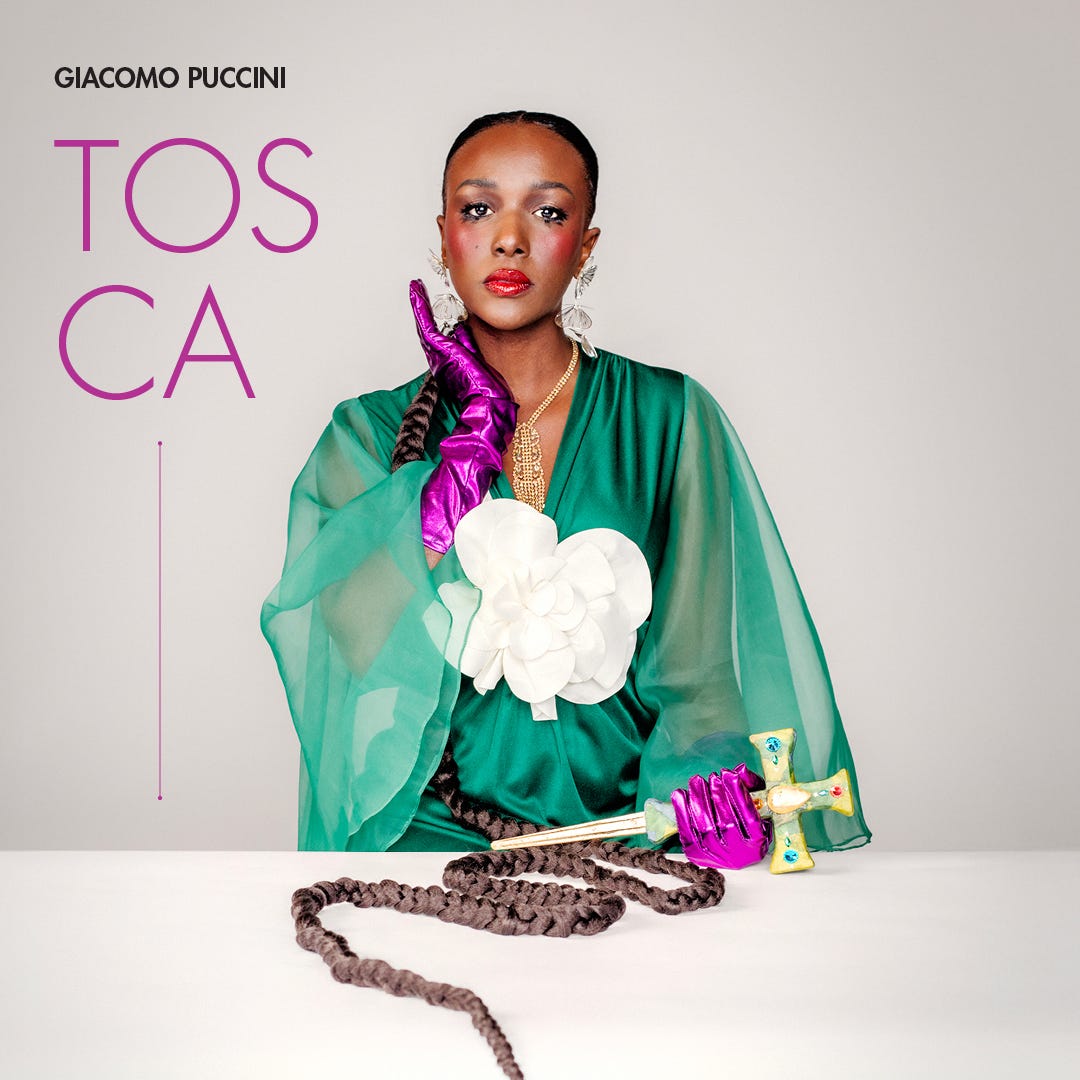
Tosca is at the Queen Elizabeth Theatre on October 24, 29 and November 1, 2026. Tickets at vancouveropera.ca.
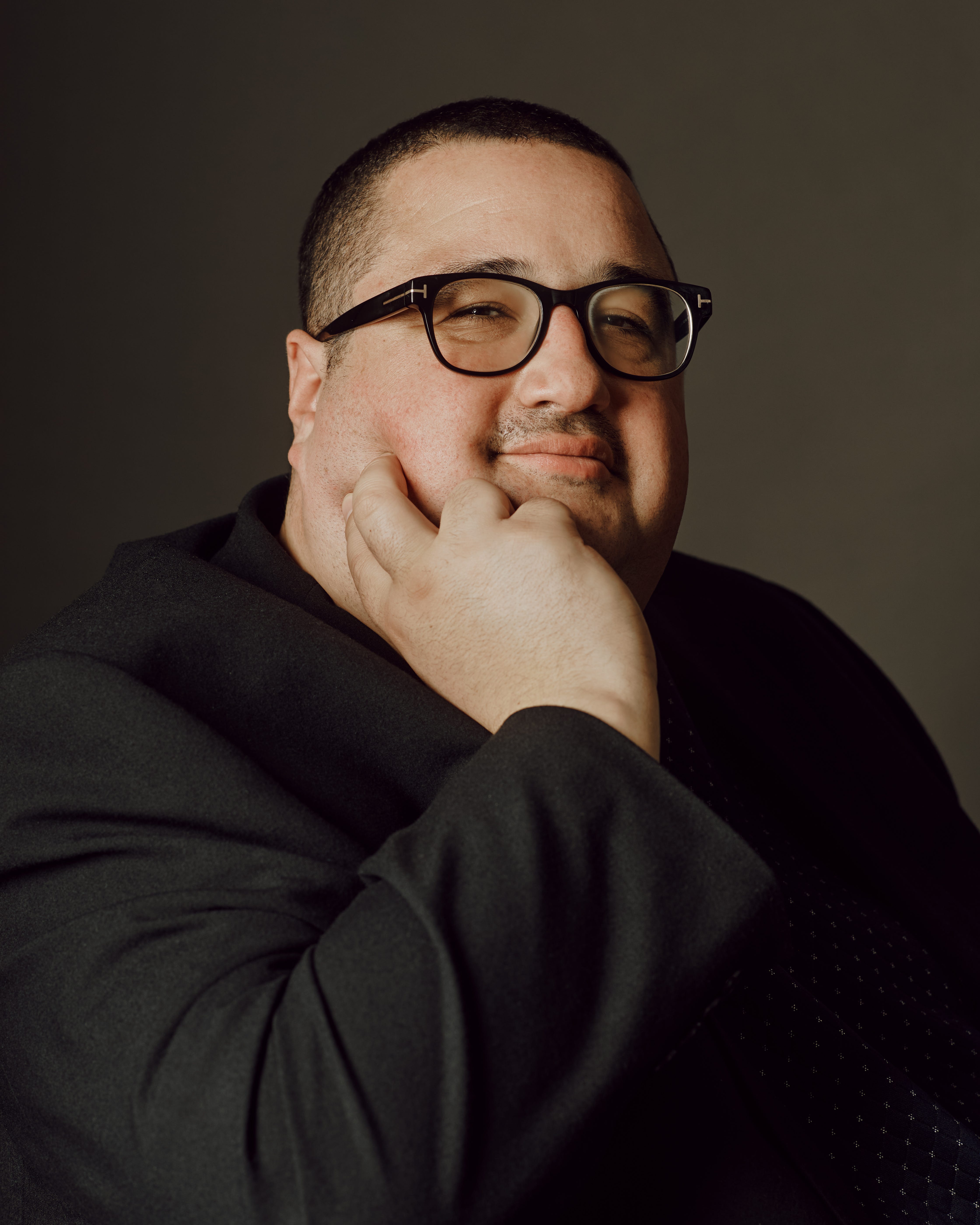
Ashley Daniel Foot - Host and Creator of Inside Vancouver Opera
Ashley Daniel Foot bridges the gap between the stage and the city through insightful, deep-dive conversations. Currently serving as Director of Engagement and Civic Practice at Vancouver Opera, he curates the multidisciplinary TD VOICES series and leads the City of Vancouver’s Arts and Culture Advisory Committee, ensuring storytelling and civic responsibility remain at the heart of the opera.