


When a voice arrives, truly arrives, it has a way of shimmering in the air — both precise and full of possibility. You hear it and think: this is something rare. That’s the impression Canadian soprano Sarah Dufresne has been leaving wherever she sings, from the Royal Opera House in London to Opéra de Montréal, and soon, on Vancouver Opera’s stage as Gilda in Verdi’s Rigoletto.
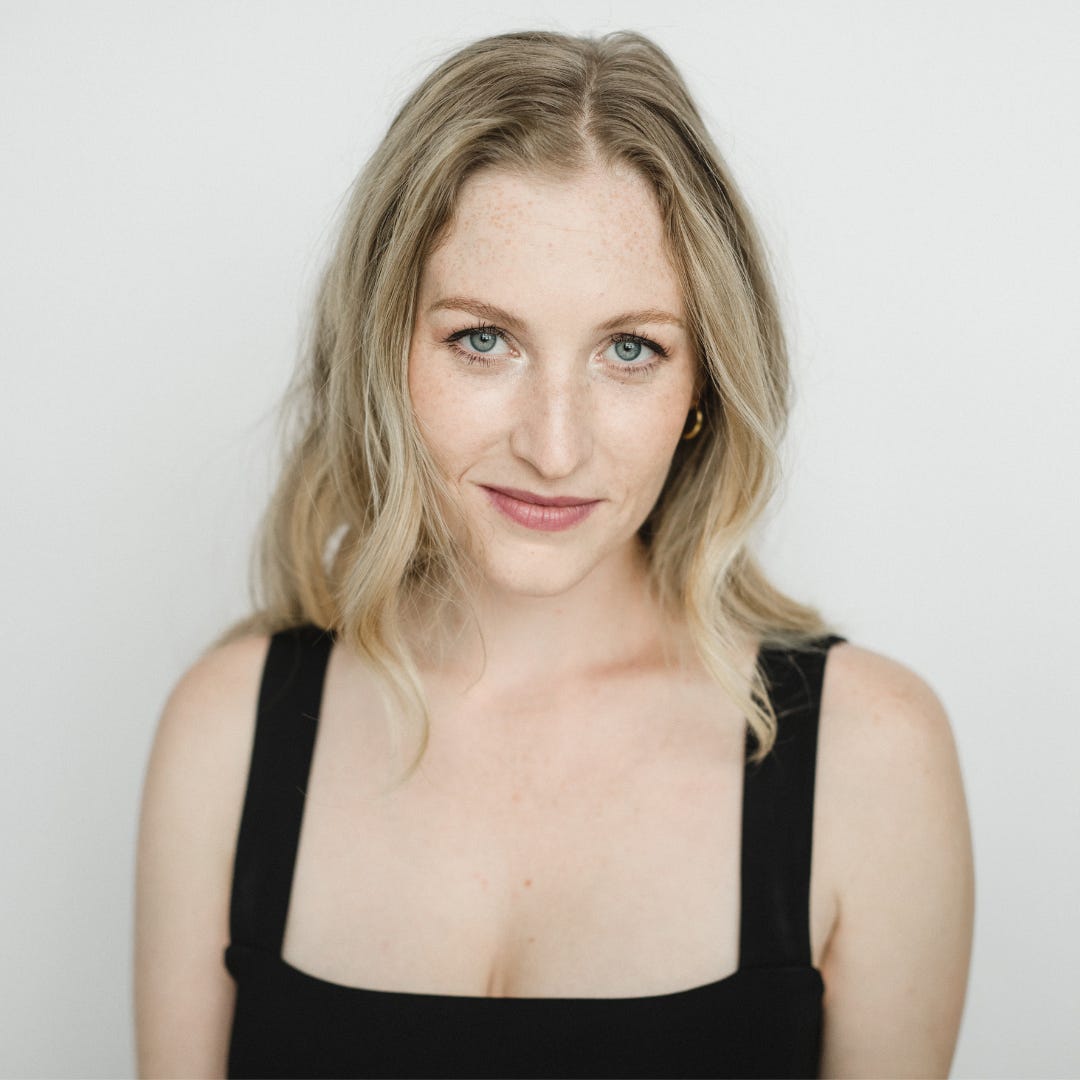
Sarah’s rise is not the story of sudden stardom, but of careful steps, each one deepening her craft. “It’s snowballed,” she tells me, “but gradually — and I feel fortunate for that. I’ve had the chance to keep working on myself, keep learning. The voice changes, the body changes, we’re never done.”
Niagara Falls, and the Doorway to Opera
Sarah grew up in Niagara Falls, where the classical music scene was small. “I sang in the church choir, I had lessons, I played piano,” she remembers. “But the Kiwanis Festival sometimes meant competing against one or two people — or just myself.”
University opened the world. At Laurier, then McGill, she encountered the full scope of what classical music could be. “In Montreal, I realized — this is real. There are places where classical music is alive and well.”
At first she wasn’t certain where her path would lead. She experimented with different styles, but teachers and coaches began to encourage her toward opera. “I always knew I’d be a singer,” she says. “But when they said, you’re actually good at this, let’s get you into performance, that’s when things started to shift.”
Her first opera role — a scene as Brigitta in Tchaikovsky’s Iolanta — gave her the thrill of inhabiting a character through voice. From there, the steps began: small roles, then covers, then the bigger leaps.
Roles That Shape a Voice
She talks about Papagena, Barbarina, the charming small roles that allow young sopranos to test themselves. But two experiences stand out.
The first was Handel’s Arminio at London’s Royal Opera House, where she sang Zelmira — her first time holding the stage as a professional lead. “It was crazy. Until then I’d done smaller parts, or covering. Suddenly I had to sustain the story for a whole night. I learned how much energy it takes. How much focus. Even how many snacks,” she laughs.
The second was Gilda — her debut in Victoria last spring. “It’s the biggest role I’ve sung,” she says. “It demanded everything. Some nights I gave too much, some nights too little. But I learned I could do it, and I could do it my way — with my own voice, my own person. That was transformative.”
Gilda, as a Teenager
For Sarah, Gilda is not a fragile victim, but a teenager brimming with intelligence and contradictions.
“She’s smart,” Sarah insists. “She pushes her father for answers, she manipulates conversations to get what she wants. She’s feisty. And she’s also in love for the first time, with all the idealism of being sixteen or seventeen. If you play her from the perspective of an adult, her choices make no sense. But if you play her as a teenager — suddenly it’s all justified.”
It’s that empathy, grounded in memory, that allows Sarah to sing Gilda with both innocence and courage. “I remember what it was like, thinking you’d do anything for someone. You look back years later and shake your head, but at seventeen, that’s all you know.”
“Caro nome” and the Freedom to Breathe
Every soprano dreams of Caro nome, Gilda’s soaring aria of first love. Sarah has lived with it for years, first studying it in her early twenties, performing it publicly for the first time at the CMIM competition in Montreal in 2022.
“It has everything a soprano could want,” she smiles. “But you have to keep loving it. Every night it changes. The cadenzas, the colours, the breath — it all shifts depending on the day. I try to approach it as Gilda would: improvising, discovering love for the first time. That’s what keeps it alive.”
Trusting the Body, Trusting the Training
What surprised her most about carrying a full role wasn’t the vocal demand, but the resilience required. “There are nights you feel tired, your focus drifts, and you think: I can’t do this. But your body carries you. Your training carries you. You realize you can rely on yourself.”
That lesson has carried into how she treats her voice. “It’s me,” she says, “but sometimes I get angrier at it than any other part of me. If my knee is sore, I don’t rage at it. But if my voice isn’t cooperating, I want to. I’ve learned to be kinder, to care for it as part of caring for myself — physically, mentally, spiritually.”
When it all aligns, the sensation is simple: ease. “You don’t have to think, everything just flows. That’s when you know you’re in the right place.”
A Voice of Emotion
Looking forward, Sarah wants to be remembered not for dazzling high notes alone, but for leading with emotion. “Certain melodies resonate so deeply in me, they make me feel peaceful, connected — to myself, to others, to the world. That’s what I want to offer: an emotional experience. In Gilda you get it all — joy, heartbreak, death. I want audiences to feel the impact of the story through me.”
The Shimmering Future
Opera careers are often spoken of in metaphors of ascent — rockets, stars, overnight brilliance. Sarah Dufresne’s journey feels more like the steady widening of a river, gathering strength as it flows. Each role deepens her technique, each stage offers new discoveries.
As she arrives in Vancouver to sing Gilda, audiences will meet not just a shimmering voice, but an artist intent on making us feel. “I want to lead from storytelling and emotion,” she says. And listening to her, you believe she already is.
Sarah Dufresne appears as Gilda in Verdi’s Rigoletto with Vancouver Opera this fall.

Verdi’s Rigoletto returns to Vancouver for the first time in 10 years. 🤡
🗓️ Saturday, Oct 25 | 7:30 PM → Tickets selling fast!
🗓️ Thursday, Oct 30 | 7:30 PM → Best availability
🗓️ Sunday, Nov 2 | 2:00 PM → Matinée
Secure your seats today: Get tickets

