

Glynis Leyshon on Why Opera Still Matters—And Why It Might Just Save Us
Verdi’s tragic 'Rigoletto' gets a fearless new lens from one of Canada’s most uncompromising directors.


Listen to the Episode
You can download this podcast on all major platforms including Apple Podcasts and Spotify.
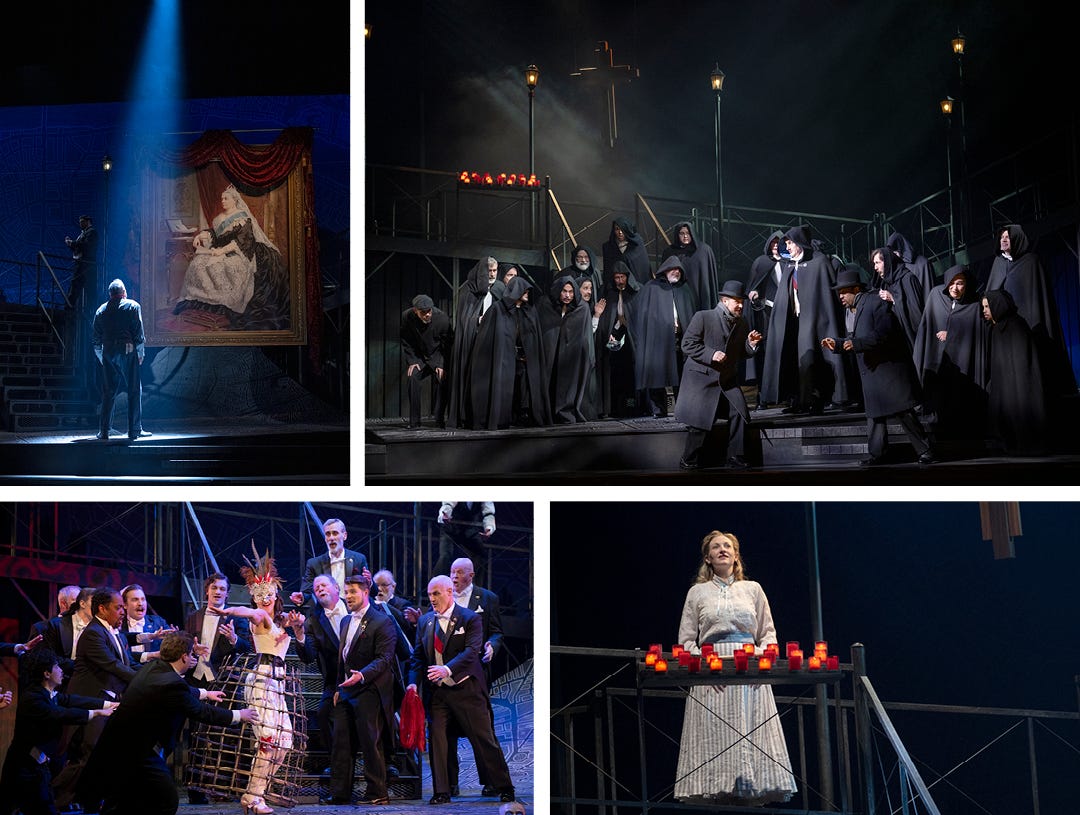
Opera is music, yes—but it’s also vision. How characters move, how a world is built, how themes like love and power are made visible on stage. Few artists have shaped Canadian theatre and opera as profoundly as Glynis Leyshon, who now brings her formidable imagination to Vancouver Opera’s new production of Rigoletto, re-set in Victorian London, a place where masks, privilege, and secrecy hold sway.
Born in Scotland and raised in North Vancouver, Leyshon began not in theatre but in art history at the University of Victoria. “I was going to be a museum conservator,” she told me. “But gradually, theatre won out.” That early training in visual composition—light, form, colour, and cultural context—would quietly become the foundation of her directing eye.
“The specificity of taking a piece of art always in its cultural, historic, and geographic context really shaped me,” she said. “How one focuses the eye, how light and dark shape a space—that was excellent training I didn’t know I was receiving.”
From the Gallery to the Stage
Her pivot to the stage began with a youth theatre collective during Pierre Trudeau’s Canada Council–fuelled era of grants for young artists. “We were called Company One,” she remembered, smiling. “We started doing summer programming and it blossomed into a full-time beginning.”
That momentum took her to the Vancouver Playhouse Theatre School under Christopher Newton, the legendary artistic director who would later shape the Shaw Festival and mentor Leyshon’s own artistic leadership. “He was nurturing of new talent,” she said. “He was able to see the needs of a community and respond to them.”
Leyshon would go on to lead both the Belfry Theatre in Victoria and the Vancouver Playhouse, all while directing more than 30 productions for Pacific Opera Victoria—from Wagner to Rodgers and Hammerstein.
Her first opera, she confessed, came by surprise. “Timothy Vernon saw a little production of Dames at Sea I’d done at the Belfry and said, I think you should direct opera. I’d never even seen an opera! But I said yes.”
“I’ll never forget that first experience of a chorus,” she said. “The wave of sound from the men in the room—it hooked me.”
Art, Leadership, and the Community We Build
As one of Canada’s foremost artistic directors, Leyshon has long understood that her job extends beyond the stage. “An artistic director has to be part of a community,” she said. “You lead with a vision that challenges, excites, entertains, and reflects the needs of both artists and audiences.”
She sees that responsibility—curating stories, shaping institutions, nurturing new voices—as vital in an era of distraction. “We’re so connected,” she reflected. “We can push a button and think we’ve learned a fact. But the sense of communion—of being live together in time as a story unfolds—is incredibly powerful. It’s more important now than ever.”
“Anything that brings humanity to the fore—exposes both the dark and the light—reminds us what we’re capable of.”
A Rigoletto for Our Time
When it came to re-imagining Verdi’s Rigoletto, Leyshon found herself drawn to its “heart of darkness.” Her new production transposes the story to Victorian London, setting the drama inside a gentleman’s club where privilege is its own kind of mask.
“Verdi had to fight the Austrian censors,” she explained. “Any suggestion that a ruler was anything but magnanimous was forbidden. Yet he was fascinated by how society can twist a soul—how someone denied their humanity becomes contorted in ways that go far beyond the physical.”
Her Rigoletto takes that cruelty and embeds it within a world of empire and entitlement. “Setting it in London felt right,” she said. “It’s close to the time Verdi wrote it, and close to the seat of power. It says something about leadership, magnetism, and the belief that the world is yours to own.”
Women, Power, and Survival
Leyshon’s re-setting also reframes the opera’s treatment of women. The production opens in an all-male club, under a massive portrait of Queen Victoria. “The Duke looks up at that painting,” she said, “and disrespects the symbol of his era. That painting transforms as the story unfolds—it’s our first hint of rebellion.”
For her, Gilda is not a naïve victim but a young woman yearning for freedom. “Her first question is, Who am I? Why can’t I fly from your protection, Father? She’s intelligent, full of faith, and vulnerable in a way we have to make contact with.”
“She defies her father to save a man who may not deserve it. That requires bravery—and shows the strength of her faith.”
Leyshon’s Maddalena, meanwhile, channels the raw energy of Peaky Blinders’ Helen McCrory: “She’s not fluff. She’s in partnership with Sparafucile. She wants, she acts, and she survives. It’s social Darwinism—the very rich and the very poor fighting to exist.”
Directing as Listening
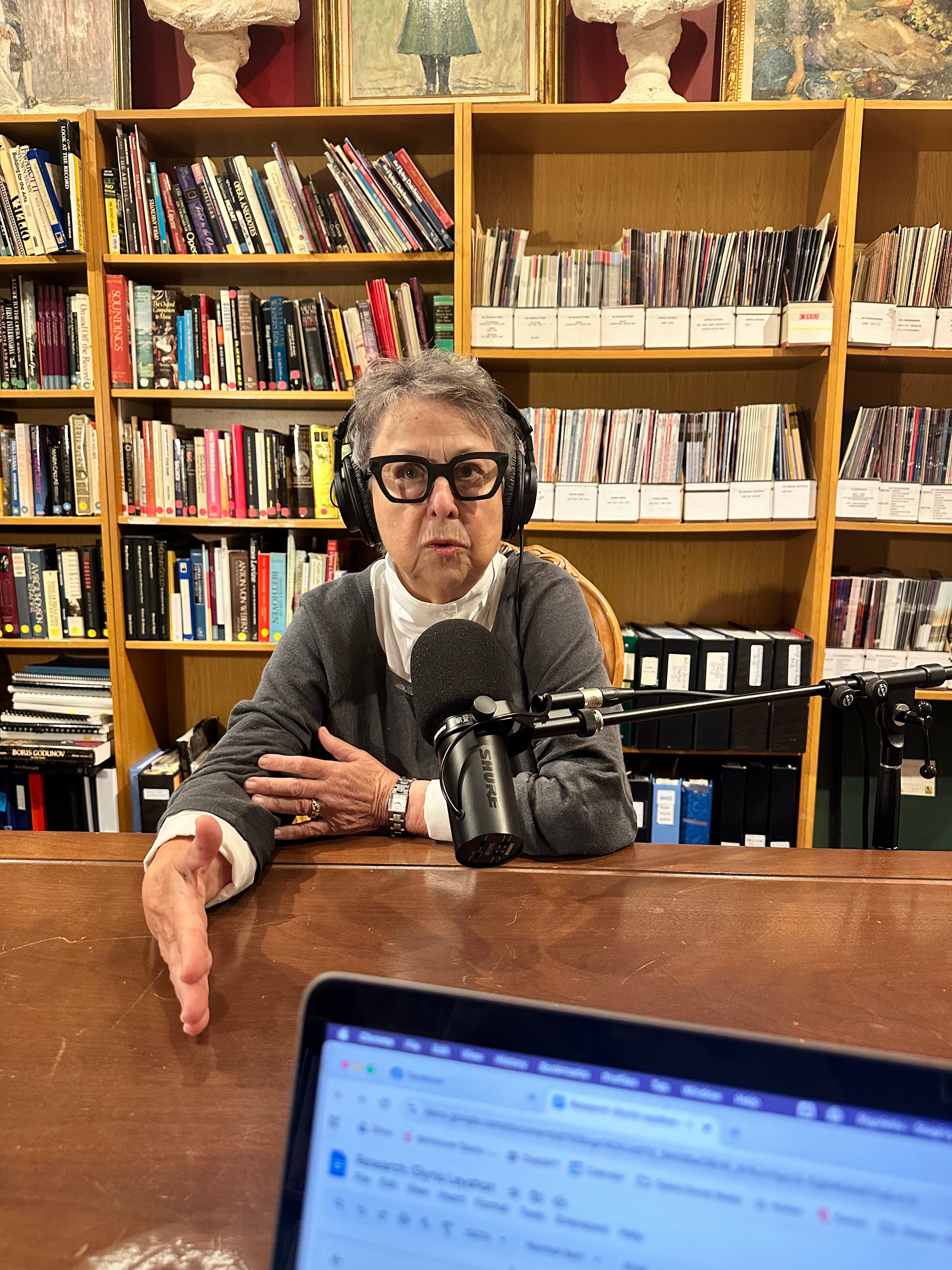
Despite decades of experience, Leyshon’s directing style remains rooted in curiosity. “I’m not a ‘raise your hand here, move there’ kind of director,” she said. “My role is to be the best eye—the best audience in the room. To see if what they’re exploring internally reads clearly, and to help shape that.”
When I asked how she knows a scene is working, she smiled: “It’s when my director brain stops. When I’m no longer thinking about up, down, right, left—I’m just engaged in what they’re doing.”
“Those moments in rehearsal when everything drops away and it’s just the father, the daughter, and their love—that’s when you know it’s worth it.”
Passing the Torch
After mentoring countless artists across Canada, Leyshon still believes fiercely in the next generation. “Be passionate,” she urged. “It’s not easy. But the arts have never been more needed—to define us, to shape us, to teach and entertain us.”
“Learn from life, not just from movies or TV. Observe. Expand yourself. You have to be capable of such an enormous range.”
As Rigoletto returns to Vancouver Opera’s stage this fall, her vision feels both timeless and urgent—a mirror to power, a meditation on love, and a reminder that art, at its best, teaches us how to see.

Verdi’s Rigoletto
Directed by Glynis Leyshon
Queen Elizabeth Theatre
October 25 – November 2, 2025
Tickets: vancouveropera.ca

Ashley Daniel Foot - Host, Inside Vancouver Opera
Ashley is Vancouver Opera’s Director of Engagement and Civic Practice and host of Inside Vancouver Opera. Boundlessly creative and fascinated by the way that art is created and presented, Ashley has guided arts organizations across Canada to craft messages and tell unique stories.
Mack McGillivray - Producer, Inside Vancouver Opera
Mack is a multimedia producer, creating shows for radio and podcast. He is passionate about cultivating local community and a lifelong lover of opera.